

How to Wake Up Early in 15 Steps: Become Your Alarm Clock
When I was little, I always had a big fight with my mum whenever it was bed time. I just hated going to bed early. And every night, she always repeated this quote by Benjamin Franklin “Early to bed and early to rise makes a man healthy, wealthy, and wise.
When I got older, I always tried to wake up early but sleeping late into the morning always won. I was jealous of my friends who seemed so ready for the day’s activities as early as 6 am. I bought the loudest alarm I could find, but it never worked. The funny thing is that I always found the strength to turn it off, but never the strength to stand up.
As a medical student, I knew there were many health benefits when you wake up early every morning so I tried to implement it in my GTD system. And always, when it was time to put the system into action, all my principle disappears with the darkness of the night.
After years of serious battle with sleep, I have come to realize that having a system in place or an alarm isn’t enough to make you become an early riser. The trick to waking up early is in two parts: both the body and the mind.
We must learn to prepare our body and also hack our minds and push them from that state of sleep.
Myths and Facts about Sleep
Myth: Sleeping for just one hour less at night won’t affect your performance during the day
Fact: You might not start sleeping during the day if you have an hour less of sleep, but it can affect how you think and your response time. Health wise, it can cause problems to your cardiovascular health, your energy levels and how well you fight off infections.
Myth: Your body can adjust fast and easily to different sleep schedules
Fact: Resetting your biological clock is very possible, but it doesn’t happen in a day. You have to take it gradually. A good example is when you travel across time zones. It can take you up to a week to accommodate to the sleeping patters.
Myth: Sleeping for longer would help relieve you of fatigue during the day
Fact: The quantity of your sleep is important, but quality is much more important. You should pay attention to how well you sleep. You might sleep for 10 hours but still feel very tired and not well rested.
Myth: Sleeping more on the weekend would help make up for the lost sleep during the week
Fact: Sleeping more on weekend might help pay for some sleep debt, but it won’t be sufficient to make up for all the sleep you have lost. Also when you sleep more on weekends, you would affect your sleep-wake cycle which would make it much harder to be awake early during week days.
What are some signs you might be sleep deprived
- When you need an alarm clock to wake you every morning
- The snooze button is your best friend
- You find it difficult to get out of bed every morning
- You feel very tired in the afternoon
- During meetings or lectures, you feel sleepy
- After eating heavy meals or when driving, you feel drowsy
- You easily fall asleep while watching TV
- You fall asleep the moment your head touches a pillow.
15 Tip on How to Wake Up Early
Check out these 15 simple tips that can help you wake up early while feeling refreshed and be productive for the rest of the day:
- Go to bed early
- “Wind down routine” before bed
- Plan for the next day before you sleep
- Upgrade your mental environment
- Do not take caffeine late in the afternoon
- Exercise during the day
- Sleep well and deep
- Never snooze the clock
- Wake up the same time everyday
- Start your day happy
- Know your “Why?”
- Have a weekend schedule
- Manage your electronic devices
- Get a pet
- Make use of your sleep cycle
1. Go to bed early
This is the first step to waking up early – reason why my mum always quoted Benjamin Franklin to me every night. The amount of sleep time each individual needs to be very efficient during the day is unique to them. Personally, I need to sleep 6 hours to be able to get anything done the next day.
Research have shown that an average adult needs about 7 to 9 hours of sleep every night to function optimally. Children and teenagers even need more sleep time. Chronic sleep loss not only stops us from waking up early the next morning but has a detrimental effect on our mood, energy levels, mental sharpness and ability to deal with stress. Not forgetting also the havoc in does to our health.
TIP: If you need 6 hours of sleep each night, go to bed 2 hours earlier. That way no matter what happens you would get your 6 hours and still wake up early.
2. “Wind down routine” before bed
Your body behaves like a toddler that has just ingested a lot of candy, it is almost impossible to make the child to stay calm. The same way it would be difficult to make your body to relax when you were fully active 5 minutes before you decided to sleep. This is why a wind down routine so important, that way your body knows it time to sleep and starts preparing for it.
Follow my step by step routine.
Step 1: An hour or two before sleep, I stop making use of any electronic device. If for any reason I have to make use of my phone or laptop, I use it at its lowest brightness.
Step 2: I have a cool shower, drink a hot cup of tea (never coffee) then I do some meditation before getting into bed.
Step 3: I get a book (most preferably non-fiction). This helps me sleep faster a while. It is better you read a physical book than the one on your phone or laptop. Social media can be very tempting and if you are not careful, you would find yourself watching cat videos 3 am in the morning.
3. Plan the next day before you sleep
The biggest obstacle to waking up early is procrastination. This one of the reasons why you would lose your early battles with sleep. When you plan your morning the day before, you know exactly what you are supposed to the next morning. This helps tremendously and gives you sense of responsibility the moment you open your eyes.
A crazy tip you can try if you live with another person is to place really loud and annoying alarm clocks in strategic places in the house. You would be forced to wake up and put it off so as not to annoy your room mates.
Example of my morning routine:
- Turn off the several hidden alarm clocks (2 min)
- Drink a full glass of water (1 min)
- Use the toilet (5 min)
- Groom and have my bath (15 min)
- Read my emails while eating breakfast (20 min)
- Put on clothes (2 min)
- Start work on Thezeroed.
It takes me just 45 minutes to get ready for the day. Having the same routine everyday has made my morning very efficient and allows me to wake up feeling ready.
4. Upgrade your mental environment
Remember I said in the beginning of this article that both your mind and body is important in enabling you become an early riser. Here are some useful habits you can cultivate to help keep your mind alert:
- Listen to podcasts that would help you in waking up early.
- Read about the benefits of waking up first thing in the morning
- Read about famous early risers
During the day when you are less busy, read up on these individuals as a motivation for sleeping early.
It is very easy to find excuses why not to get up when your alarm goes off. But when you have conditioned yourself properly, you would always find the required energy to wake up.
5. Do not take caffeine late in the afternoon
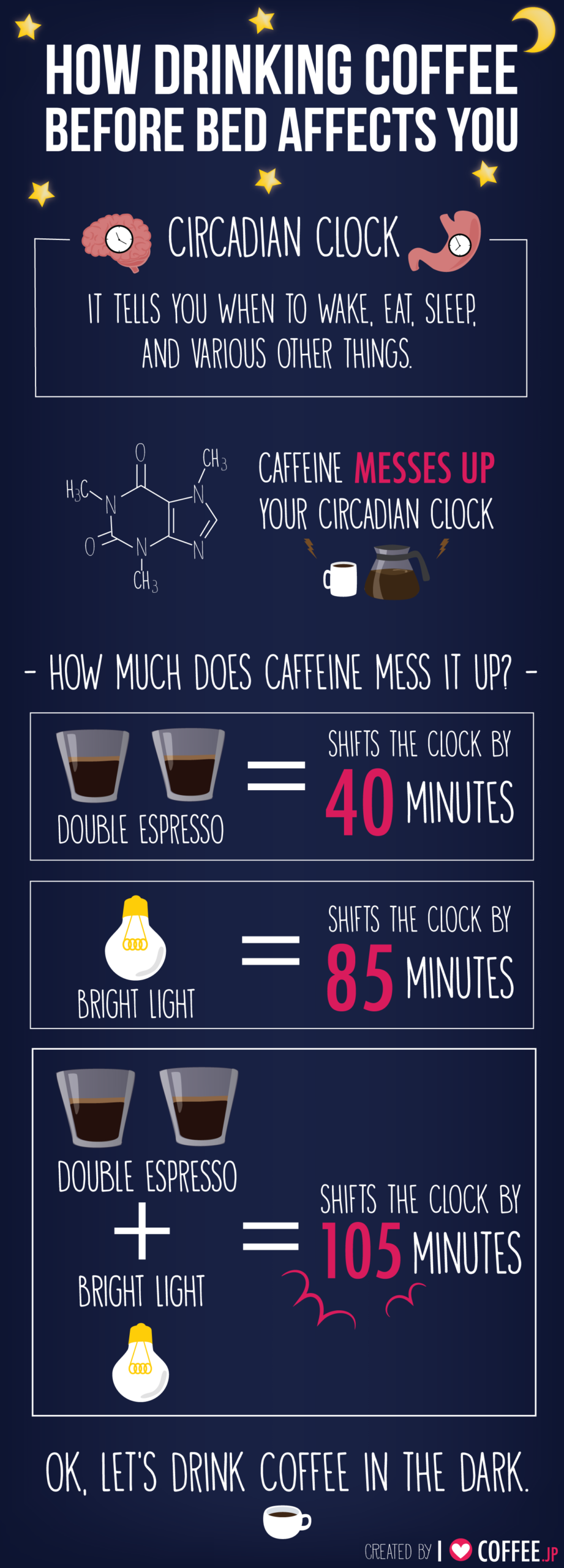
You should read this article by psychology today on the effects that caffeine has on sleep. Caffeine can be harmful to your sleep cycle so I advise you stay clear during the evening.
6. Exercise during the day
Research has shown that exercise has a tremendous effect on sleep. If you want to sleep faster at night and wake up feeling energized, exercising is your best option. Even few minutes of aerobic exercise like brisk walking or cycling can improve your quality of sleep especially this is your daily practice.
Another benefit of exercise is that reduce your chances of suffering sleep disorders like sleep apnea and restless leg syndrome. Exercise helps you sleep better in other ways since it helps reduce you stress level and makes you tired.
7. Sleep well and deep
The battle of waking up early doesn’t happen only in your mind. The quality and quantity of the sleep is also very important factor.
How can you sleep well?
- Go to bed early if you want to wake up early
- Pay attention to what you eat. Do not eat heavy food before your bedtime
- Physical activity would allow you sleep deeper.
8. Never snooze the clock
REM sleep is important, but after you snooze the alarm button you are no longer getting a restful sleep. You mind would continue to wander and you would just be wasting your time.
When you keep snoozing the alarm clock, you would wake up with a million thoughts on your mind and be less productive during the day. Regularly hitting the alarm would cause you to become immune to the alarm bells.
9. Wake up the same time everyday
When you wake up the same time every day, your body becomes used to it and regulate your sleep patterns to it. You would have more restful sleep when you wake up at the same time regularly. With time, your body would start to wake up on its own without the alarm clock.
10. Start your day happy
We live in a world that is fast paced and geared at doing everything faster and more efficiently. Most of the activities that we partake in daily needs a tremendous amount of willpower and determination. If you wake up every morning and force yourself to do your tasks, you wouldn’t find the urge to wake up.
You would find it easier to wake up in the morning if you perform the tasks that makes your happier and you would look forward too. Do the task that would give you most excitement first.
It can be something as little as walking through the park, getting your favorite donuts at your best restaurants or even yoga.
What makes people happy is different for each individual, the most important thing is that you make sure that you have at least one exciting activity in your list of things to do in the morning. It would help improve your mood and increase your productivity for the remainder of the day.
11. Know your “why?”
This is not a good reason – “I heard that waking up early would make me a much happier and productive person”. This is not a good reason as it is not specific to you and won’t push you to take any action.
If you want to change any habit, you would have to have a very strong reason (your why). It has to be crystal clear because this is the reason you would want to wake up early. Without this why, you would continue to snooze the alarm clock.
Some good reasons; do you want to become much healthier and fit? Do you want to improve sales in your business? To help people that are in need of assistance? To fight for the rights of the less privileged?
If you don’t have anything you stand for, you would sleep in almost every day.
12. Have a weekend schedule
It is important that you wake up on weekends the same time you wake up during week days. The reason why most of us sleep in during weekends is because we don’t have anything to do since it is our day off.
You can also plan out your leisure time on weekends the same way you plan your week day. You can sign up for a hiking tour or an early morning class. You can develop a hobby, personally I enjoy cooking. Do things that you wouldn’t normally do in week days.
It sounds funny to plan your free day, but you would be more productive during the day than just waking up during the day to figure it as you go on.
13. Manage your electronic device
George Halachev in his article in Better Humans wrote this, “6 years ago, when I was really struggling with waking up early, something happened that made me an early riser in just 3 days – my computer died. It was easy as that.”
Your phones, TV and laptop serves as a distraction and would keep you up late at night. The only electronic device I can recommend is an iPod. You can use it to listen to audio books if you don’t want physical copies. It would help to sleep faster also.
With time you would get used to staying away from these devices especially when you start becoming an early riser. You have to realize that waking up early is hot wired into humans, all we have to do is eliminate the distractions.
TIP: Instead of just turning them off, because what is stopping you from just turning them back on. You can lend them out for some weeks. If you can’t lend off, every night give a friend or family member the device with a mandate not to give you back till the next morning.
Staying off electronics can be a very tough choice, but it can be very fulfilling also. It reduces your chances of failing. The lesser your temptation, the better for you.
14. Get a pet
Being accountable for another life would give you incentive to being awake bright and early. You don’t want your cat scratching your face early in the morning because they are hungry.
When you get a pet, give her food for the first few days at 6 AM. They would make sure that you get their food ready by 5:55 AM. Knowing that you would need to take your dog on a walk before you go to work in the morning, you would be forced to wake up early to take them for the walk and also prepare for work.
15. Make use of your sleep cycle
There are days when you wake up and you don’t feel tired at all right? You just feel so energetic and ready for the day’s activities. You just feel amazing!
Some morning also, you wake up and your muscles feels so heavy and you just can will yourself to stands up no matter how hard you try.
What is the difference between both instances?
When we go to sleep at night, our bodies goes through a sleep cycle.
They are four stages of sleep with stage 1 (REM) being the lightest one (where are you are most awake) and Stage 4 deepest one. You would feel better when the alarm goes on when you are closer to the awake state. If you wake up close to stage 4 you would feel really terrible.
You can use these sleep states to your advantage:
Try to figure put the time in the morning when you are in the REM state. You can do this by watching how you feel when the alarm goes off. If you wake up by 6 AM and you are feeling groggy, push it further to 7 AM. Do this until you are waking up much more easily.
Once you find your best time, you can start moving back the time your alarm rings gradually by 10-15 minutes. This would help regulate your sleep cycle until you reach your target time.
NOTE: This method would only work if you sleep around the same time every night. If you change your sleep time even by 30 minutes, you would affect your sleep cycle and would have to start the process all over again.